Smart plugs compared – which ones actually help you save energy
Every smart plug can switch a lamp. Far fewer measure what the appliance uses, and fewer still let an energy manager read that measurement and switch the plug when your solar panels are producing or electricity is cheap. We compared nine smart plugs sold in Europe on exactly that.
Compare plugs What to look forWhat a smart plug is good for in an energy system
A plug is the cheapest piece of hardware that can both measure and control a single appliance. In the Zerofy app it does three jobs.
Find out what things cost
Most households are wrong about where their electricity goes. An hour with a measuring plug on the freezer, the aquarium or the old second fridge usually settles the argument – and standby loads that run 8,760 hours a year add up faster than people expect.
Run appliances on solar surplus
When your panels produce more than the house needs, Zerofy switches the plug on instead of exporting the surplus for a few cents. A dehumidifier, a pool pump, a towel rail or a second water heater are ideal – they do not care when they run, only that they run.
Follow a dynamic tariff
On a dynamic tariff the price changes every hour. Zerofy knows tomorrow's prices and can move the same flexible loads into the cheapest window, without you watching a price curve.
Six things to check before you buy
The differences that matter are not the ones on the packaging. These are the ones that decide whether a plug is still useful in a year.
Does it actually measure?
A plug that only switches tells you nothing. Look for power in watts and a cumulative energy total in kWh – the Philips Hue and Amazon plugs, for example, switch but do not measure, which makes them useless for this job.
Tip: Check the spec sheet for "power metering" or "Energiemessung", not just "smart".
Enough amps for the load
Ratings here run from 10 A (2300 W) to 16 A (3680 W). A fan heater, a kettle or a 2 kW immersion heater will sit close to the limit, and a plug run permanently at its maximum gets warm.
Tip: For heaters and water heaters pick 13 A or 16 A. For a fridge, a pump or a TV, 10 A is plenty.
An open interface
This is what separates a plug you can automate from one you can only tap. A documented local HTTP or MQTT API, or a cloud API your energy manager supports, means something other than the manufacturer's app can read and switch it.
Tip: Shelly and myStrom both document their local APIs. Zerofy connects through the manufacturer cloud in both cases.
Does it need a hub?
Wi-Fi plugs work on their own. Zigbee needs a Zigbee hub, DECT-ULE needs a FRITZ!Box, and Thread needs a Matter controller that is also a border router. None of that is a problem if the hub is already in your hallway – it is an extra purchase if it is not.
Tip: Count the hub in the price if you do not already own one.
Matter is not the whole story
Matter makes pairing easy and keeps a plug working if the manufacturer's cloud is switched off. But the Matter electrical-measurement cluster is not yet widely implemented, so in most controllers you get on/off and sometimes live power – not the energy history.
Tip: Treat Matter as insurance against vendor lock-in, not as a replacement for a proper API.
Indoors or outdoors
Almost every plug on this page is indoor-only, rated 0 °C to 40 °C and explicitly not for damp rooms. A pond pump, garden lights or anything on a balcony needs an IP44 model built for it.
Tip: An indoor plug in a weatherproof box is not the same thing – the plug itself has to be rated.
The plugs
Nine smart plugs sold in Europe, grouped by whether an independent energy manager can do anything with them. Prices are typical street prices in October 2026.
Plugs with a Zerofy integration
Two brands have their own entry in the Zerofy app. You log in with your manufacturer account, the plugs appear next to your solar system and battery, and Autopilot can switch them on solar surplus or on price.
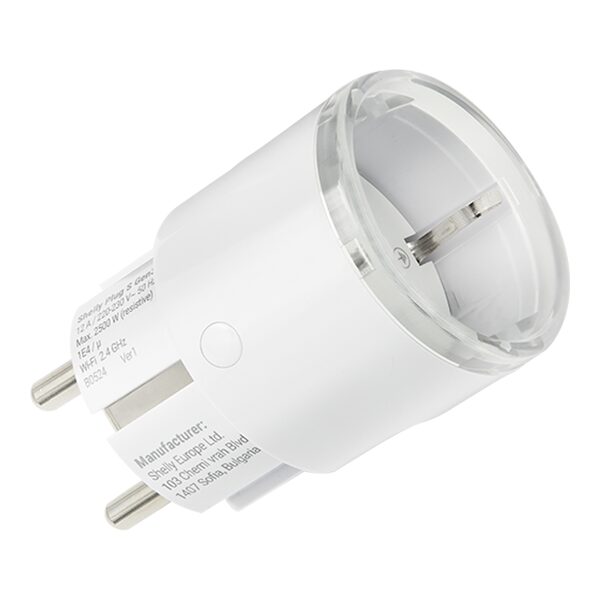
Shelly Plug S MTR Gen3
from €16
The default choice if you want a plug that an energy manager can actually use. It measures power and energy, switches up to 2500 W, needs no hub, and exposes a documented local HTTP and MQTT API as well as Matter. Zerofy connects through your Shelly Cloud account, so the plug shows up next to your solar system and can be switched by Autopilot.
- Max load
- 2500 W / 12 A
- Connectivity
- Wi-Fi 2.4 GHz, Bluetooth
- Hub needed
- None
- Local API
- HTTP + MQTT
- Plug type
- Schuko (type F)
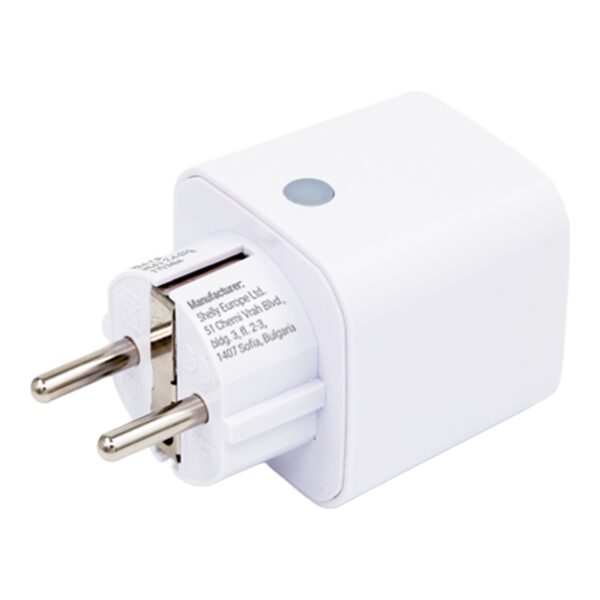
Shelly Plug M Gen3
from €13
Same platform as the Plug S, but rated for 13 A instead of 12 A and usually the cheapest Shelly plug of the three. The extra headroom matters for a 2–3 kW heater, a dehumidifier or a water heater, which are exactly the loads worth moving into a solar surplus window.
- Max load
- 3000 W / 13 A
- Connectivity
- Wi-Fi 2.4 GHz, Bluetooth
- Hub needed
- None
- Local API
- HTTP + MQTT
- Plug type
- Schuko (type F)
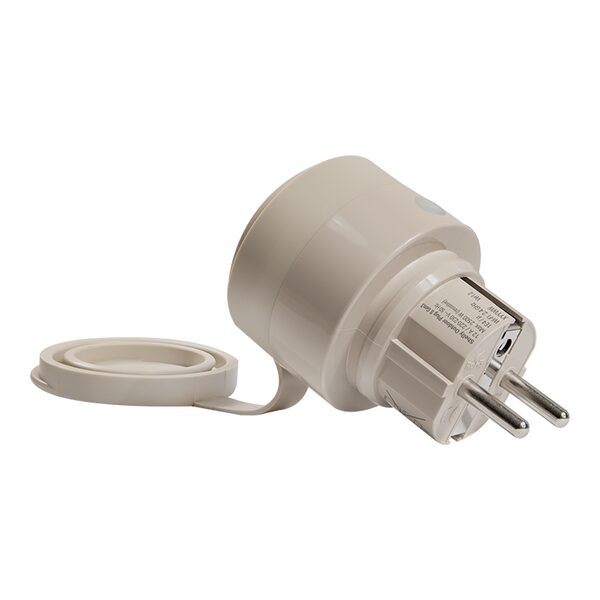
Shelly Outdoor Plug S Gen3
from €18
The weatherproof (IP44) version, rated down to −25 °C. Useful for a pond pump, garden lighting or a balcony setup you want to run on your own solar rather than on grid power. It behaves exactly like the indoor Shelly plugs in the Zerofy app.
- Max load
- 2500 W / 12 A
- Connectivity
- Wi-Fi 2.4 GHz, Bluetooth
- Hub needed
- None
- Local API
- HTTP + MQTT
- Plug type
- Schuko (type F)
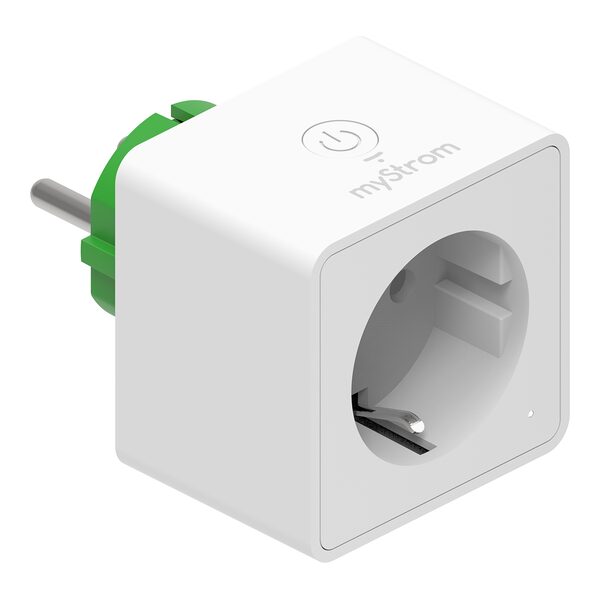
myStrom WiFi Switch
from €39
The Swiss alternative, and the only plug here rated for the full 16 A. It measures from 2 W upwards with a stated accuracy of ±1 %, has a built-in temperature sensor and a simple local REST API. It is sold in a Schuko and a Swiss type J version, and Zerofy connects to it through your myStrom account.
- Max load
- 3680 W / 16 A
- Connectivity
- Wi-Fi 2.4 GHz
- Hub needed
- None
- Local API
- HTTP + MQTT
- Plug type
- Schuko (type F), Swiss (type J)
Plugs that measure, but stay in their own app
These all measure energy properly. What they do not have is a path into an independent energy manager – the history lives in the manufacturer's app, and Matter, where it exists, carries switching but not the energy data.
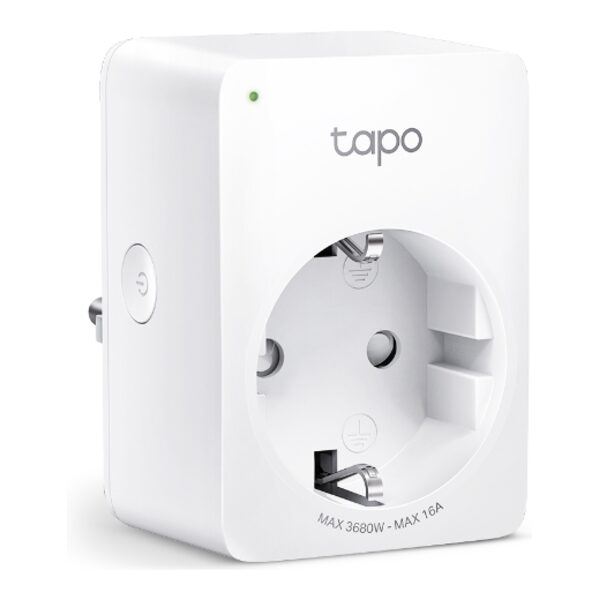
TP-Link Tapo P110
from €15
The cheapest way to find out what an appliance actually costs you. Energy monitoring, 16 A, no hub, and it keeps switching on a schedule even when the internet is down. There is no official local or cloud API, though, so the readings stay inside the Tapo app.
- Max load
- 3680 W / 16 A
- Connectivity
- Wi-Fi 2.4 GHz
- Hub needed
- None
- Local API
- None
- Plug type
- Schuko (type F)
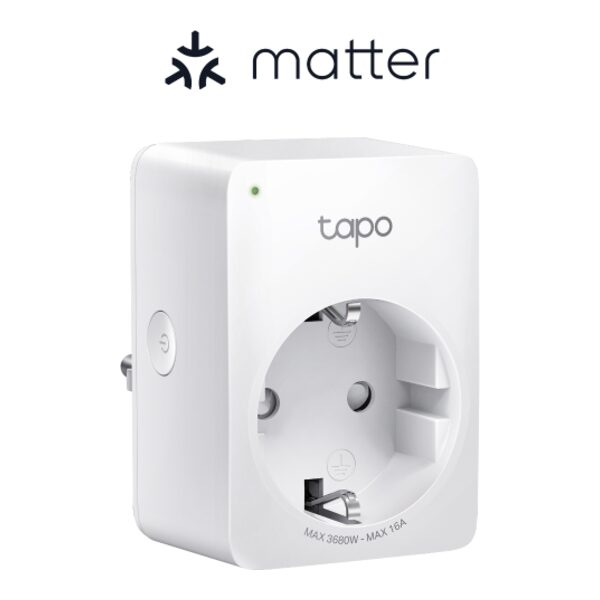
TP-Link Tapo P110M
from €18
The Matter version of the P110, which is what makes it interesting: you can pair it straight into Apple Home, Alexa, Google Home or Home Assistant without the Tapo cloud. Note that Matter only carries on/off and power here – the energy history still lives in the Tapo app.
- Max load
- 3680 W / 16 A
- Connectivity
- Wi-Fi 2.4 GHz
- Hub needed
- None
- Local API
- None
- Plug type
- Schuko (type F)
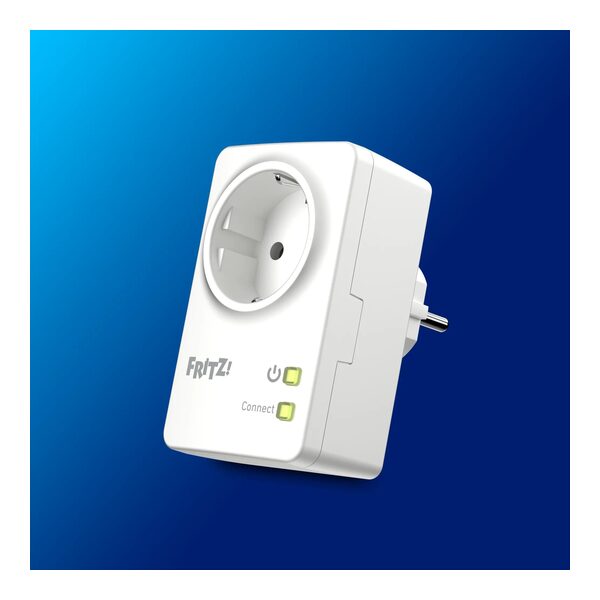
AVM FRITZ!Smart Energy 200
from €30
Formerly the FRITZ!DECT 200, and still the most common smart plug in German households simply because the FRITZ!Box is already there. DECT-ULE goes through walls where 2.4 GHz Wi-Fi gives up, and the box keeps a 15-minute, daily, monthly and yearly consumption history. It needs a FRITZ!Box with a DECT base – it will not work on its own.
- Max load
- 2300 W / 10 A
- Connectivity
- DECT-ULE
- Hub needed
- FRITZ!Box with DECT
- Local API
- via the hub
- Plug type
- Schuko (type F)
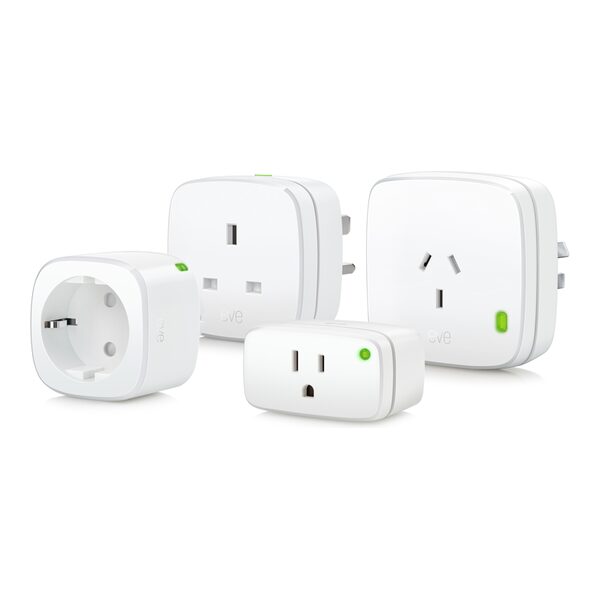
Eve Energy
from €40
The pick for an Apple household. It speaks Thread and Matter rather than Wi-Fi, which means low latency and no extra load on your router, and it works with Apple Home, Alexa, Google Home, SmartThings, Home Assistant and Homey. You do need a Matter controller that is also a Thread border router – a HomePod mini, Apple TV or Echo of recent vintage.
- Max load
- 2500 W / 11 A
- Connectivity
- Thread, Bluetooth
- Hub needed
- Matter controller with Thread
- Local API
- None
- Plug type
- Schuko (type F), Swiss (type J), UK (type G)
Aqara Smart Plug EU
from €25
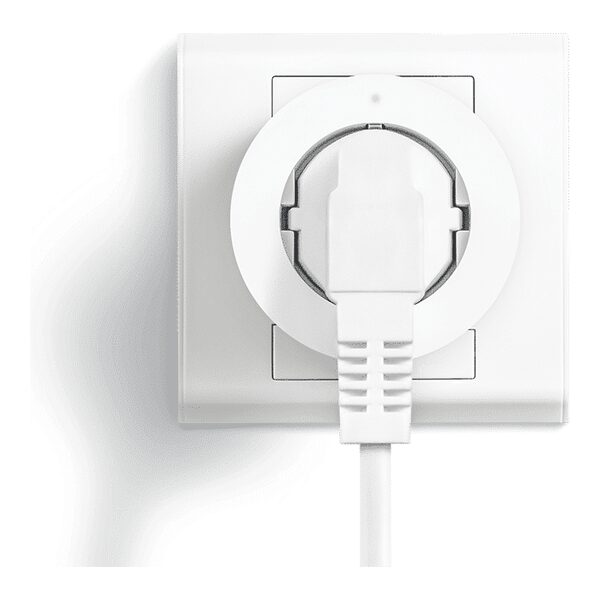
Zigbee 3.0, so it needs an Aqara hub – but once that hub is there, the plug itself is cheap and it doubles as a Zigbee repeater for the rest of your sensors. Overheat and overload protection are built in. It is the weakest of the group on raw load: 10 A, so no fan heaters.
- Max load
- 2300 W / 10 A
- Connectivity
- Zigbee 3.0
- Hub needed
- Aqara hub
- Local API
- via the hub
- Plug type
- Schuko (type F)
No plug matches that search.
Full comparison
Side by side on the specs that decide whether a plug fits your setup.
| Model | Price | Max load | Connectivity | Matter | Hub needed | Local API | Outdoor (IP44) | Zerofy |
|---|---|---|---|---|---|---|---|---|
| Shelly Plug S MTR Gen3 | €16 | 2500 W / 12 A | Wi-Fi 2.4 GHz, Bluetooth | Yes | None | HTTP + MQTT | – | Yes |
| Shelly Plug M Gen3 | €13 | 3000 W / 13 A | Wi-Fi 2.4 GHz, Bluetooth | Yes | None | HTTP + MQTT | – | Yes |
| Shelly Outdoor Plug S Gen3 | €18 | 2500 W / 12 A | Wi-Fi 2.4 GHz, Bluetooth | Yes | None | HTTP + MQTT | Yes | Yes |
| myStrom WiFi Switch | €39 | 3680 W / 16 A | Wi-Fi 2.4 GHz | – | None | HTTP + MQTT | – | Yes |
| TP-Link Tapo P110 | €15 | 3680 W / 16 A | Wi-Fi 2.4 GHz | – | None | None | – | – |
| TP-Link Tapo P110M | €18 | 3680 W / 16 A | Wi-Fi 2.4 GHz | Yes | None | None | – | – |
| AVM FRITZ!Smart Energy 200 | €30 | 2300 W / 10 A | DECT-ULE | – | FRITZ!Box with DECT | via the hub | – | – |
| Eve Energy | €40 | 2500 W / 11 A | Thread, Bluetooth | Yes | Matter controller with Thread | None | – | – |
| Aqara Smart Plug EU | €25 | 2300 W / 10 A | Zigbee 3.0 | – | Aqara hub | via the hub | – | – |
Prices are indicative street prices in Germany in October 2026, including VAT, and change constantly. We do not sell these products and earn nothing if you buy one.
More models in our database
Pages we keep for individual plugs, including some older models that are no longer on the main comparison above.
Amazon Amazon Smart PlugAqara Smart Plug EUEve Eve EnergyHombli Smart SocketIkea TrådfriKasa Kasa 25P4Meross Smart Plug with Energy MonitoringMyStrom SwitchPhilips Hue PlugShelly Plug SShelly PlugTP Link Tapo P115Woox Smart PlugWyze Wyze Plug
One app for the plug, the panels and the car
A smart plug on its own gives you a number. It becomes useful when something decides when to switch it – and that decision needs to know what your solar system is producing and what electricity costs right now.
- Shelly and myStrom plugs connect with your manufacturer account, no extra hardware
- Autopilot switches them on solar surplus or in the cheapest hours of a dynamic tariff
- Consumption per plug sits in the same history as your solar, battery, heat pump and car
- Balcony solar setups can be metered through a plug instead of a separate meter


Questions we get asked
Can a smart plug make my fridge or my heating smarter?
Not really, and in the case of a fridge you should not try. Cutting power to a compressor on a schedule shortens its life and risks your food. Smart plugs belong on loads that genuinely do not mind being interrupted – dehumidifiers, pumps, towel rails, water heaters, chargers, lights. For a heat pump, use its own interface or an SG Ready contact instead.
How accurate are the measurements?
Good plugs state ±1 % over most of their range; Shelly and myStrom both do. Accuracy falls off at very low loads, so a 2 W standby reading is a rough indication rather than a number to build a bill on. None of these plugs is a calibrated meter and none may be used for billing a third party.
Do I need a smart plug if I already have a smart meter reader?
They answer different questions. A P1 dongle or optical reader tells you what the whole house is doing, in real time, which is what solar surplus control needs. A plug tells you what one appliance is doing and can switch it. Most people who care about this end up with one meter reader and two or three plugs.
Why does Zerofy only support Shelly and myStrom?
Because both publish a documented API and are happy for third parties to use it. Where a manufacturer keeps control inside its own app, an independent energy manager cannot switch the plug at the moment it matters. If that changes for another brand, we will add it.
Can I use a smart plug to measure my balcony solar system?
Yes, and it is a common setup. A metering plug between the microinverter and the socket gives Zerofy the production figure for a plug-in solar system that has no monitoring of its own. Check your inverter's output stays within the plug's rating.
What about Tasmota, ESPHome and Home Assistant?
If you flash your own firmware you already have a local API and can do most of this yourself. Shelly plugs are the easiest route because they ship with a local API and you do not have to open anything. Nothing on this page needs flashing.
Specs come from the manufacturers' own product pages and data sheets, checked on 18 October 2026. Prices change weekly – treat them as an order of magnitude. If you spot something out of date, tell us and we will fix it.